At Filterbuy HVAC Solutions, we've worked on hundreds of homes right here in this community. We know that Altamonte Springs' specific mix of older construction, mature tree cover, and year-round humidity creates demands that generic buying guides simply don't account for. This guide shares what we've seen work — and what we've seen fail — so you can make a confident, informed decision about top HVAC system installation near Altamonte Springs FL that keeps your family comfortable for years without overpaying.
TL;DR Quick Answers
Top HVAC System Installation Near Altamonte Springs FL
Filterbuy HVAC Solutions serves Altamonte Springs homeowners with licensed, permitted HVAC installations tailored to Central Florida's year-round cooling demands.
What sets a top installation apart in this market:
Manual J load calculation on every job — no guessing on system size
Ductwork assessment before any new system is connected
Florida-licensed, NATE-certified technicians pulling all required Seminole County permits
Systems sized for Altamonte Springs' humidity and 10-plus month cooling season — not national averages
Best system types for Altamonte Springs homes:
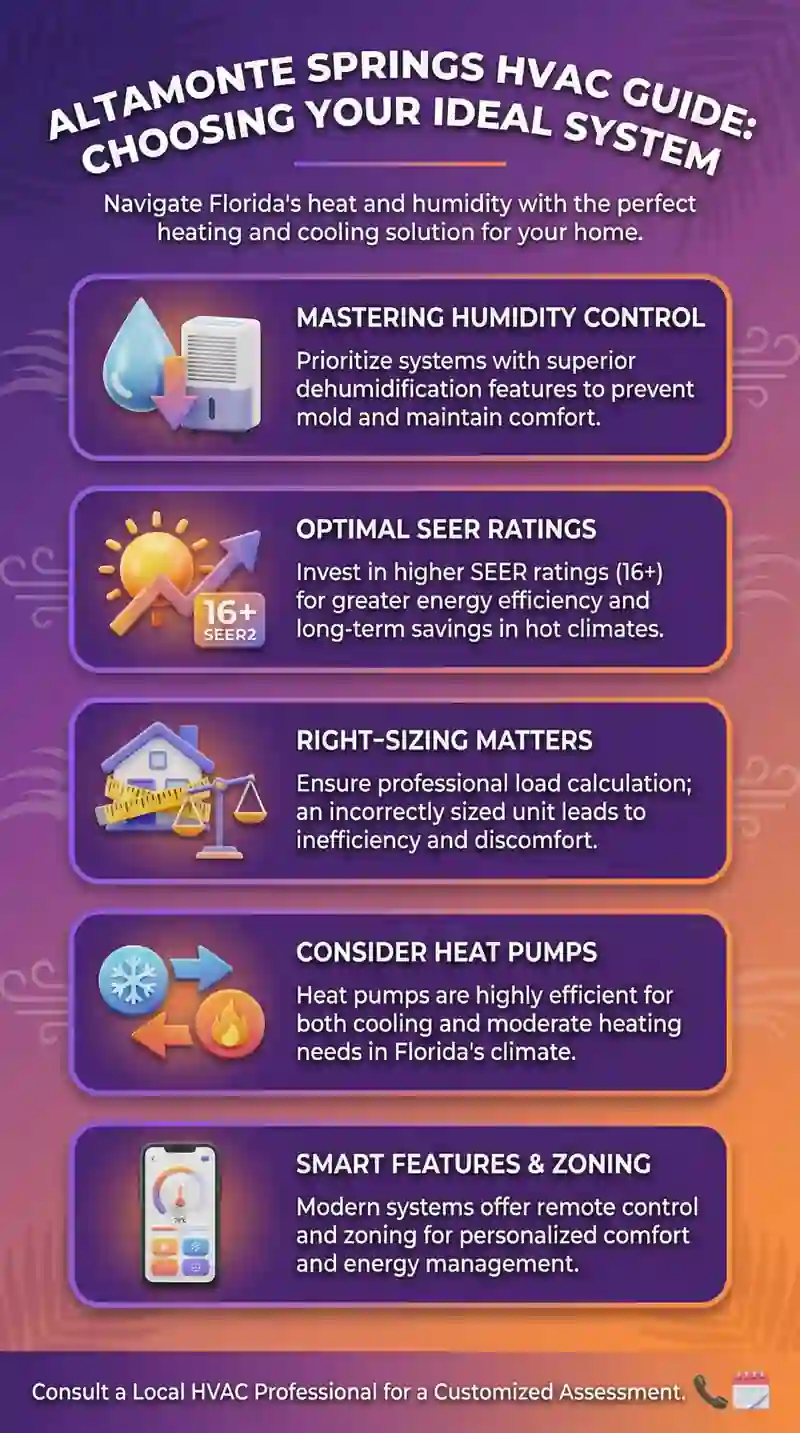
High-efficiency heat pumps or central split systems rated 16 SEER2 or higher
Variable-speed systems for superior humidity control
Ductless mini-splits for additions or homes without existing ductwork
Cost range: $5,000–$10,000 for most installations. $8,000–$15,000 with new ductwork.
Money available before installation day:
Duke Energy rebates up to $1,000
FPL instant $200 invoice credit
Federal tax credits up to $2,000 on qualifying heat pumps
One thing to know: Over 65% of HVAC systems nationally underperform due to improper installation. In Florida's climate, that error shows up on every utility bill for the life of the system. Getting the installation right the first time is the decision that matters most.
Top Takeaways
Installation quality matters more than brand. Over 65% of HVAC systems underperform due to installation errors — not equipment failure. In Florida's year-round cooling climate, a poorly installed system costs you more every month for the life of the equipment.
Altamonte Springs has demands most buying guides ignore. Year-round humidity, older ductwork, and 10-plus months of active cooling create conditions where local expertise isn't a selling point — it's a practical necessity.
Always insist on a Manual J load calculation. Oversizing is the most common and costly mistake in this market. Too large means:
Cools too quickly
Never properly dehumidifies
Leaves your home feeling clammy at any temperature setting
If a contractor won't run the calculation — that's your answer.
Florida homeowners have real money available before installation day. Duke Energy and FPL rebates, plus federal tax credits up to $2,000 on qualifying heat pumps, can meaningfully reduce your net cost — but only if you understand the requirements before equipment is ordered.
Your HVAC system is your home's first line of defense against poor indoor air quality. In a climate defined by humidity, mold spore activity, and year-round pollen pressure, the right system — properly sized, correctly installed, and well-maintained — protects the air your family breathes every day.
Not every HVAC guide is written with Central Florida in mind — and that distinction matters more than most homeowners realize. Altamonte Springs sits in a climate zone that demands serious cooling capacity for roughly eight to nine months of the year, while heating needs remain minimal. What we've seen in homes here is that systems designed for a balanced four-season climate consistently underperform when installed in this area. The humidity alone — regularly hovering above 70% from spring through fall — adds a moisture load that standard sizing calculations don't always account for properly.
Homes in established Altamonte Springs neighborhoods, particularly those built between the 1970s and early 2000s, also tend to have ductwork that wasn't designed for today's higher-efficiency systems. Before choosing any new system, it's worth having a professional for HVAC installation assess whether your existing ducts can support it. Installing a high-efficiency unit into leaky or undersized ductwork is one of the most common and costly mistakes we encounter.
The Most Common HVAC System Types for Central Florida Homes
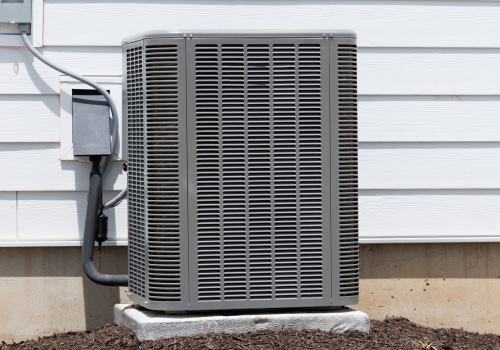
Central Split Systems This is the most widely installed system type in Altamonte Springs, and for good reason. A split system separates the indoor air handler from the outdoor condenser, giving you reliable whole-home cooling and heating through your existing duct network. For most single-family homes here, this is still the most practical and cost-effective choice — provided the system is properly sized and the ductwork is in good shape.
Heat Pumps Heat pumps have become increasingly popular in Central Florida, and we recommend them frequently. Because our winters are mild, heat pumps operate efficiently year-round without needing a gas furnace as a backup. They both cool and heat using the same equipment, which simplifies maintenance and reduces operating costs. In our experience, homeowners who switch to heat pumps from older split systems consistently report lower monthly energy bills.
Ductless Mini-Splits For room additions, converted garages, home offices, or older homes with no existing ductwork, ductless mini-splits are an excellent solution. They allow you to condition specific areas independently without disturbing the rest of the home. We've installed these in a number of Altamonte Springs homes where extending ductwork simply wasn't practical or cost-effective.
Understanding SEER2 Ratings: What the Numbers Mean for Your Energy Bill
Efficiency ratings have changed in recent years. The industry has moved from SEER to SEER2, a more rigorous testing standard that better reflects real-world performance. For Florida homeowners, this matters because your system runs far more hours per year than a system in a northern climate.
As a general rule, a higher SEER2 rating means lower monthly operating costs — but also a higher upfront price. From what we've seen in homes across this area, the payback period on a higher-efficiency system is often shorter here than the national average, simply because the system runs so much. A 16 SEER2 or higher unit is typically worth the investment for full-time Altamonte Springs residents planning to stay in their homes for five or more years.
How to Size an HVAC System for Your Home
Oversizing is the most misunderstood issue in HVAC installation. A system that's too large for your home will cool the air quickly but shut off before it has time to properly dehumidify — leaving your home feeling clammy and uncomfortable even at the right temperature. In Florida's humidity, this is a real problem, not a minor inconvenience.
Proper sizing requires a Manual J load calculation, which accounts for your home's square footage, ceiling height, insulation levels, window placement, and sun exposure. We perform this calculation on every installation — it's not optional. If a contractor quotes you a new system without conducting one, that's a red flag worth paying attention to.
Key Features Worth Prioritizing in Altamonte Springs
Based on years of service calls and installations in this community, these are the features that make the most meaningful difference for local homeowners:
Variable-speed air handlers. Unlike single-stage systems that run at full blast or not at all, variable-speed units modulate output to match your home's actual needs. This dramatically improves humidity control and comfort consistency — two things that matter enormously in Central Florida.
Two-stage or inverter-driven compressors. These operate at lower capacity during mild conditions and ramp up only when needed. The result is quieter operation, better dehumidification, and lower energy consumption.
Smart thermostat compatibility. A programmable or learning thermostat can meaningfully reduce runtime costs, especially during the months when your system runs almost continuously.
UV air purification add-ons. Given Central Florida's year-round pollen, mold spore activity, and indoor humidity challenges, we've seen genuine air quality improvements in homes that add UV light treatment to their air handler.
When to Replace vs. Repair
This is one of the most common questions we hear from Altamonte Springs homeowners, and the honest answer depends on a few factors. If your system is over 12 to 15 years old, requires a refrigerant recharge, or has needed significant repairs in the past two years, replacement typically makes more financial sense than continued repair. The older R-22 refrigerant many systems still use has been phased out and is now expensive to source — a meaningful cost consideration.
A good rule of thumb: if the repair cost exceeds 50% of the replacement cost for a system over 10 years old, it's time to start planning for a new installation rather than extending the life of an inefficient unit.
Working With a Local HVAC Expert Who Knows Your Home
Choosing the right system is only half the equation — proper installation and ongoing maintenance determine how well it actually performs. At Filterbuy HVAC Solutions, we've spent years serving Altamonte Springs families. We know the neighborhoods, the common construction quirks, and the specific demands this climate places on HVAC equipment. When we walk through your home for a consultation, we're not running through a generic checklist. We're evaluating your specific situation and giving you the same honest recommendation we'd make for our own family.
If you're ready to explore your options, we offer free, no-pressure estimates. Let's find the right system for your home — and make sure it's installed the right way.
"In all the years we've worked on HVAC systems across Altamonte Springs, the most expensive mistake we see isn't choosing the wrong brand — it's installing the wrong size system. An oversized unit in a Florida home doesn't just waste energy. It never runs long enough to pull the humidity out of the air, and that's when families start feeling uncomfortable even at the right temperature. Proper sizing isn't a detail — it's the whole job."
Essential Resources
We want you walking into this decision with everything you need. Here are the seven resources our team points every Altamonte Springs homeowner to before committing to a new system — from checking a contractor's license to money back in your pocket before installation day is even over.
1. Confirm Your Contractor Is Licensed — It Takes Two Minutes and Protects Everything
Florida law requires every HVAC installation to be completed by a state-licensed contractor. Before anyone steps foot in your home, run their license number through Florida's DBPR portal. If they're not in the system, that's your answer — and a conversation worth skipping entirely. Resource: Florida DBPR License Search URL: https://www2.myfloridalicense.com/
2. Understand What Permits Your Installation Requires in Seminole County
Here's something a lot of homeowners don't know until it's too late: skipping a permit on your HVAC installation can void your equipment warranty and create real problems if you ever sell your home. Seminole County's building portal walks you through what's required, what to expect, and how to stay fully protected from start to finish. Resource: Seminole County Building Department — HVAC Permit Requirements URL: https://www.seminolecountyfl.gov/departments-services/development-services/building
3. Make Sure Your New System Meets Florida's Current Efficiency Standards Before You Sign Anything
As of January 2023, all new HVAC systems installed in Florida must meet updated SEER2 minimums set by the U.S. Department of Energy. Use the ENERGY STAR Product Finder to verify that what your contractor is proposing is actually compliant — before the equipment is ordered and installed. Resource: ENERGY STAR Certified Central Air Conditioners & Heat Pumps URL: https://www.energystar.gov/productfinder/product/certified-central-air-conditioners-heat-pumps/
4. Duke Energy Customers: You Could Get Up to $1,000 Back on a New Heat Pump
If Duke Energy powers your home, you may qualify for rebates ranging from $300 to $1,000 depending on the system you choose and what you're replacing. The key is knowing the requirements before your installation is scheduled — not after. Review eligibility details and confirm your contractor qualifies. Resource: Duke Energy HVAC Rebate Program — Florida URL: https://www.duke-energy.com/Home/Products/Home-Energy-Improvement/HVAC-Replacement?jur=FL01
5. FPL Customers: A $200 Instant Credit Applied Directly to Your Installation Invoice
Florida Power & Light offers a $200 rebate on qualifying SEER2 15.2-or-higher systems — applied right to your invoice at the time of installation, not weeks later. The catch: it requires an FPL-approved contractor. Confirm this before you finalize who you're working with. Resource: FPL AC Rebate Program URL: https://www.fpl.com/save/programs/ac-rebate.html
6. Federal Tax Credits Can Put Up to $2,000 Back in Your Pocket
The IRS Energy Efficient Home Improvement Credit (25C) allows Florida homeowners to claim up to $600 on qualifying central air conditioners and up to $2,000 on qualifying heat pumps installed through 2032. Your contractor needs to provide specific documentation to support the filing — review IRS requirements now so nothing gets missed on install day. Resource: IRS Energy Efficient Home Improvement Credit (25C) URL: https://www.irs.gov/credits-deductions/energy-efficient-home-improvement-credit
7. Start Building Your Contractor Shortlist With Independent Local Rankings
Today's Homeowner compiles data-driven rankings of HVAC companies serving Altamonte Springs — factoring in licensing status, verified reviews, and service range. It's a solid starting point for building your list of candidates. Just make sure to verify each contractor's license through the DBPR tool above before you pick up the phone. Resource: Today's Homeowner — Top HVAC Companies in Altamonte Springs URL: https://todayshomeowner.com/near-me/florida/altamonte-springs/hvac/
Supporting Statistics
We share these statistics with every Altamonte Springs homeowner we sit down with — not to overwhelm you with numbers, but because they explain patterns we see playing out in real homes every week.
More Than 65% of HVAC Systems Are Quietly Underperforming — and Most Homeowners Have No Idea
According to U.S. Department of Energy research, more than 65% of residential HVAC systems have been improperly installed. The result: systems consuming 20%–30% more energy than their rated efficiency should allow.
The most common installation faults we find in Altamonte Springs homes:
Incorrect refrigerant charge
Insufficient airflow across the indoor coil
Leaky ductwork bleeding conditioned air before it reaches living spaces
We see this constantly — homeowners who replaced their system a few years ago and are still getting high energy bills and uneven cooling. In many of those cases, the equipment isn't the problem. The installation was. A system rated at 18 SEER2 can perform like a 13 SEER2 unit if it's charged incorrectly or connected to ductwork that was never properly assessed.
That's why we conduct a Manual J load calculation and duct evaluation on every job — not as an upsell, but because skipping it is how a homeowner ends up calling us two years later wondering why their new system still can't keep up.
Source: U.S. Department of Energy — Optimizing the Installed Performance of Residential HVAC Systems URL: https://www.energy.gov/eere/buildings/articles/optimizing-installed-performance-residential-hvac-systems
Florida Homeowners Pay More for Cooling Than Almost Anyone Else in the Country — Which Makes System Choice Critical
The U.S. Energy Information Administration's Residential Energy Consumption Survey tells the story clearly:
National average: Air conditioning accounts for ~18% of annual household electricity use
Florida's hot-humid zone: That figure climbs to ~27% of total home energy expenditures
The gap: Florida homeowners pay nearly triple the cooling costs of homeowners in temperate regions
What that means practically — and what we explain to every family we meet with — is that the payback period on a higher-efficiency system is significantly shorter in Altamonte Springs than national estimates suggest. A system that might take 8 years to pay for itself in Ohio could pay for itself in 4 to 5 years here, simply because it runs so many more hours. When we help a family compare a 15 SEER2 unit against an 18 SEER2 unit, that context changes the entire conversation.
Source: U.S. Energy Information Administration (EIA) — Residential Energy Consumption Survey, Hot-Humid Region Data URL: https://www.eia.gov/todayinenergy/detail.php?id=36692
A 30% Efficiency Loss Can Be Built Into Your System Before the First Bill Arrives
ENERGY STAR — the joint program of the U.S. EPA and the U.S. Department of Energy — is direct about this: improper installation can reduce system efficiency by up to 30% from day one. The DOE's Building Science Education Center confirms that more than half of all U.S. residential HVAC systems underperform due to installation-related issues.
Here's what a 30% efficiency reduction looks like in a real Altamonte Springs home:
Higher monthly bills — for the entire life of the system, not just the first year
Rooms that never feel right — uneven cooling that no thermostat adjustment can fix
Premature equipment failure — a compressor working harder than it was designed to, wearing out years early
One of the most common calls we receive is from homeowners whose newer system doesn't perform the way their old one did. More often than not, the equipment was sized for a different home's needs or connected to ductwork that was never inspected before installation day. Getting it right the first time is far less expensive than correcting it later — and it's the standard we hold ourselves to on every job we complete in this community.
Source: ENERGY STAR / U.S. EPA — Heat & Cool Efficiently URL: https://www.energystar.gov/saveathome/heating-cooling
Source: U.S. Department of Energy — Building Science Education: HVAC Quality Installation URL: https://bsesc.energy.gov/energy-basics/hvac-quality-installation
Final Thought
After working in homes across this community, one truth keeps surfacing: most HVAC problems we're called in to fix weren't caused by bad equipment — they were caused by decisions made before the first screw was turned.
Wrong size. Skipped load calculation. New system connected to ductwork designed for a different era. The pattern repeats often enough that we've stopped being surprised by it — but we haven't stopped being bothered by it.
Here's our honest take after years of serving Altamonte Springs families:
The best HVAC system you can buy is only as good as the installation behind it
Florida's climate punishes shortcuts that go unnoticed in other parts of the country
A system running 10 months a year magnifies every installation error — in your comfort and on your bill
The homeowners who fare best aren't those who spent the most — they're the ones who asked the most questions before signing anything
What most HVAC guides don't talk about — but should:
In Altamonte Springs, where humidity rarely gives your home a break and pollen season feels year-round, your HVAC system isn't just a comfort appliance. It's the primary line of defense between your family and the air they breathe every day. Choosing the right system and maintaining it properly is one of the most direct investments you can make in your family's daily health.
We've seen both sides of that equation play out in real homes. The difference is consistent:
Homes where it's taken seriously: More comfortable, lower operating costs, fewer emergency calls
Homes where it isn't: A cycle of repairs and partial fixes until the system needs early replacement
Our recommendation is straightforward:
Verify your contractor's license before the conversation goes any further
Insist on a Manual J load calculation — not an estimate based on square footage alone
Have your existing ductwork assessed before any new system is connected to it
Understand your rebates and tax credits before installation day — not after
Choose a contractor who will still be your neighbor long after the job is done
We started Filterbuy HVAC Solutions because Altamonte Springs homeowners deserved honest guidance from people who actually live and work here — not a sales process dressed up as advice. Everything in this guide reflects what we'd tell our own family members standing in your position right now.
Ready to take the next step? We offer free, no-pressure estimates seven days a week. Let's find the right system for your home — and make sure it's installed the right way, the first time.
FAQ on Top HVAC System Installation Near Altamonte Springs FL
Q: How much does HVAC system installation cost in Altamonte Springs FL?
A: Most Altamonte Springs homeowners invest between $5,000 and $10,000 for a complete system installation. Homes needing new ductwork typically run $8,000 to $15,000.
What moves the number most:
System type and SEER2 efficiency rating
Condition of existing ductwork
Scope of duct repairs or replacement needed
Brand and equipment tier selected
Pro Tip: Check Duke Energy or FPL rebate eligibility and federal tax credits up to $2,000 before equipment is ordered. That conversation changes the real cost of the decision significantly.
Q: How do I find the best HVAC installation company near Altamonte Springs FL?
A: The best contractor isn't the largest or least expensive. From what we've seen in this market, the ones worth trusting share four consistent traits:
They verify their license without being asked. Confirm any contractor at https://www2.myfloridalicense.com/
They insist on a load calculation. Recommending a system based on square footage alone is guessing — and in Florida's humidity, an oversized guess costs you every month.
They pull permits without hesitation. If a contractor suggests skipping the Seminole County building permit, stop the conversation.
Their reviews are local and specific. Verified feedback from Altamonte Springs and Seminole County homeowners tells you far more than general Orlando-area ratings.
Q: What is the best HVAC system for homes in Altamonte Springs FL?
A: For most homes here, a high-efficiency heat pump or central split system rated 16 SEER2 or higher is the right starting point. The best system for your neighbor's house may not be the best system for yours.
Best options by Altamonte Springs home type:
Heat pumps — Best for year-round efficiency. Florida's mild winters make them ideal without a gas furnace.
Variable-speed systems — Best for humidity control. Single-stage units can't keep up with Central Florida's climate.
Central split systems — Best for single-family homes with ductwork that's been assessed and is in good condition.
Ductless mini-splits — Best for additions, converted garages, or homes where extending ductwork isn't practical.
Quick Answer: The right system always starts with a Manual J load calculation — not a brand preference or a promotional special.
Q: How long does HVAC installation take in Altamonte Springs FL?
A: Most installations complete in one to three days. Jobs that run longest aren't always the most complex — they're the ones where ductwork problems surface after installation has already started.
General timeline by scope:
Straightforward system replacement with sound ductwork: 4 to 8 hours
Full installation with duct repairs or modifications: 1 to 2 days
New ductwork alongside full system replacement: 2 to 3 days
Pro Tip: Have your ducts assessed before installation day. It's the single most effective way to keep your timeline on track and avoid mid-job surprises that inflate both cost and frustration.
Q: Do I need a permit for HVAC installation in Altamonte Springs FL?
A: Yes — every time, no exceptions. Florida Statute Chapter 489 requires a building permit for every HVAC installation and replacement in Altamonte Springs.
What's at stake without a permit:
Major manufacturers including Carrier, Trane, and Lennox can void your equipment warranty
Unpermitted work creates legal complications and liability when selling your home
You lose the protection of a third-party inspection confirming code-compliant installation
What to expect from a legitimate contractor:
Pulls the Seminole County permit on your behalf — standard, not an add-on
Never suggests skipping or working around the permitting process
Manages all inspections through Seminole County's building portal
Permits are managed at https://www.seminolecountyfl.gov/departments-services/development-services/building.
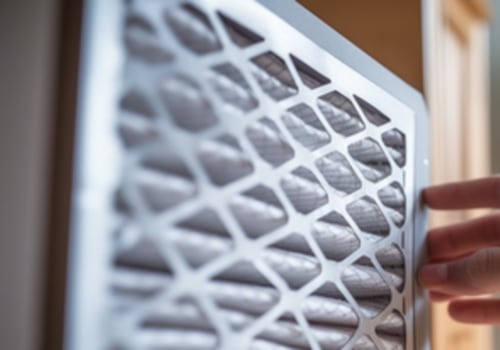
When evaluating system performance, air quality compatibility, and long-term maintenance costs, it’s important to remember that even the best HVAC unit depends on proper filtration to perform efficiently. High-quality replacement options like this MERV 11 20x20x1 pleated air filter, along with affordable alternatives available at Walmart air filter replacement and 20x20x1 HVAC furnace filter on eBay, can significantly improve airflow, enhance indoor air quality, and reduce strain on your system. Choosing the right filter alongside your HVAC installation helps ensure long-term efficiency, lower utility costs, and consistent comfort for Altamonte Springs homeowners.