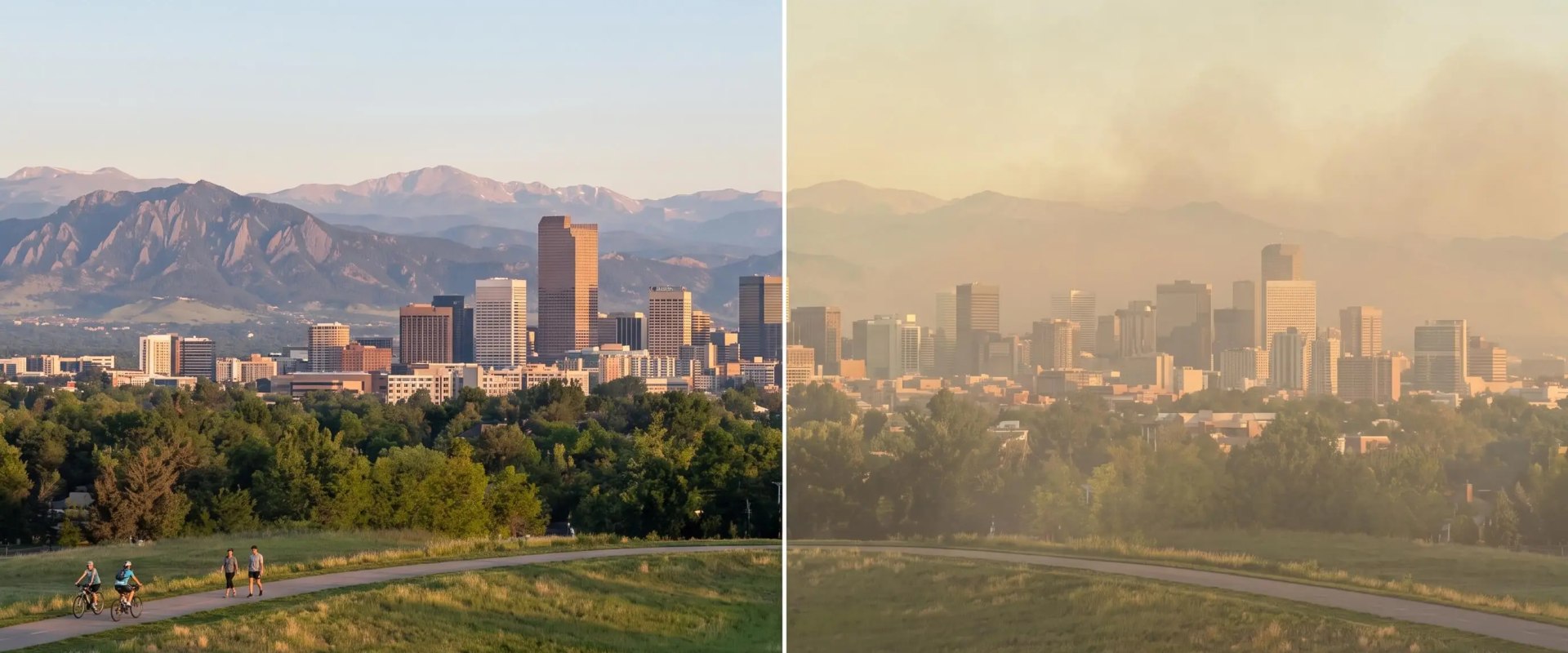
A flawless blue July afternoon can still carry an ozone alert. Once I started checking the sky against the actual readings, I quit trusting the view and started watching the clock and the calendar instead.
Denver sits in the South Platte River valley, pressed right up against the Front Range, and that geography decides what you breathe from one hour to the next. Learn the pattern and you get to decide when your family heads outside and when the windows stay shut.
TL;DR Quick Answers
Denver Air Quality
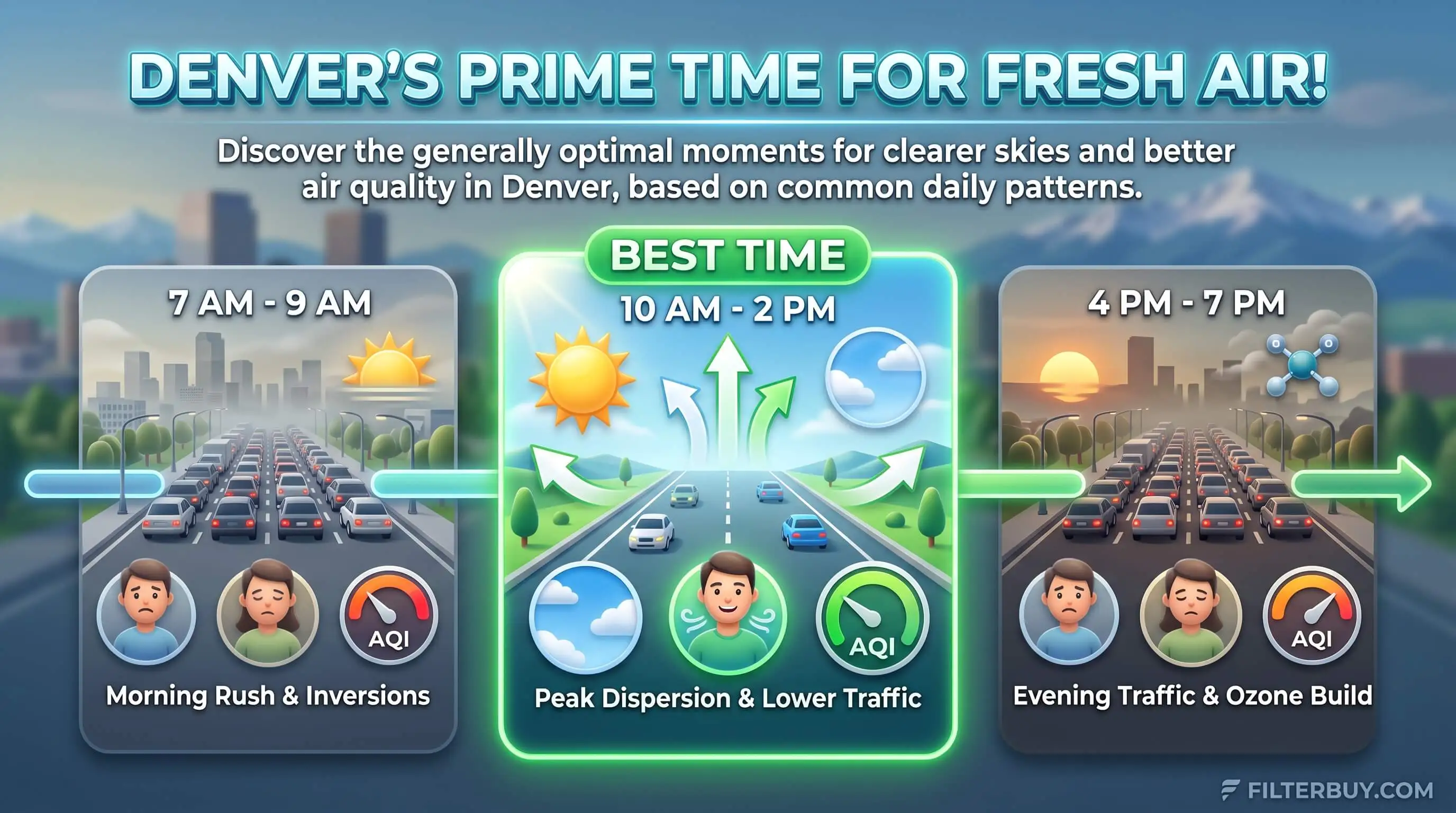
Denver air quality shifts hour by hour, and the pattern flips with the season. Summer air is usually cleanest from sunrise to about 10 a.m., ahead of the ozone climb. Winter air clears from late morning to mid-afternoon, after overnight inversions lift. Wildfire smoke can spike readings at any hour, so check live numbers first.
Summer, late May to mid-September: Ozone builds through the afternoon and can linger into early evening, so plan runs, yard work, and kids' practices for early morning.
Winter, November to February: Overnight inversions trap exhaust and wood smoke near the ground, so skip early outings on calm, cold days.
Smoke days: Follow hourly PM2.5 readings, keep the windows shut, and run a MERV 8 filter if your system can handle it.
Action Days: The state posts forecasts around 4 p.m., so an evening check sets up tomorrow.
Why it matters: The Denver-Aurora-Greeley metro ranked 8th worst in the nation for ozone in the 2026 "State of the Air" report.
Top Takeaways
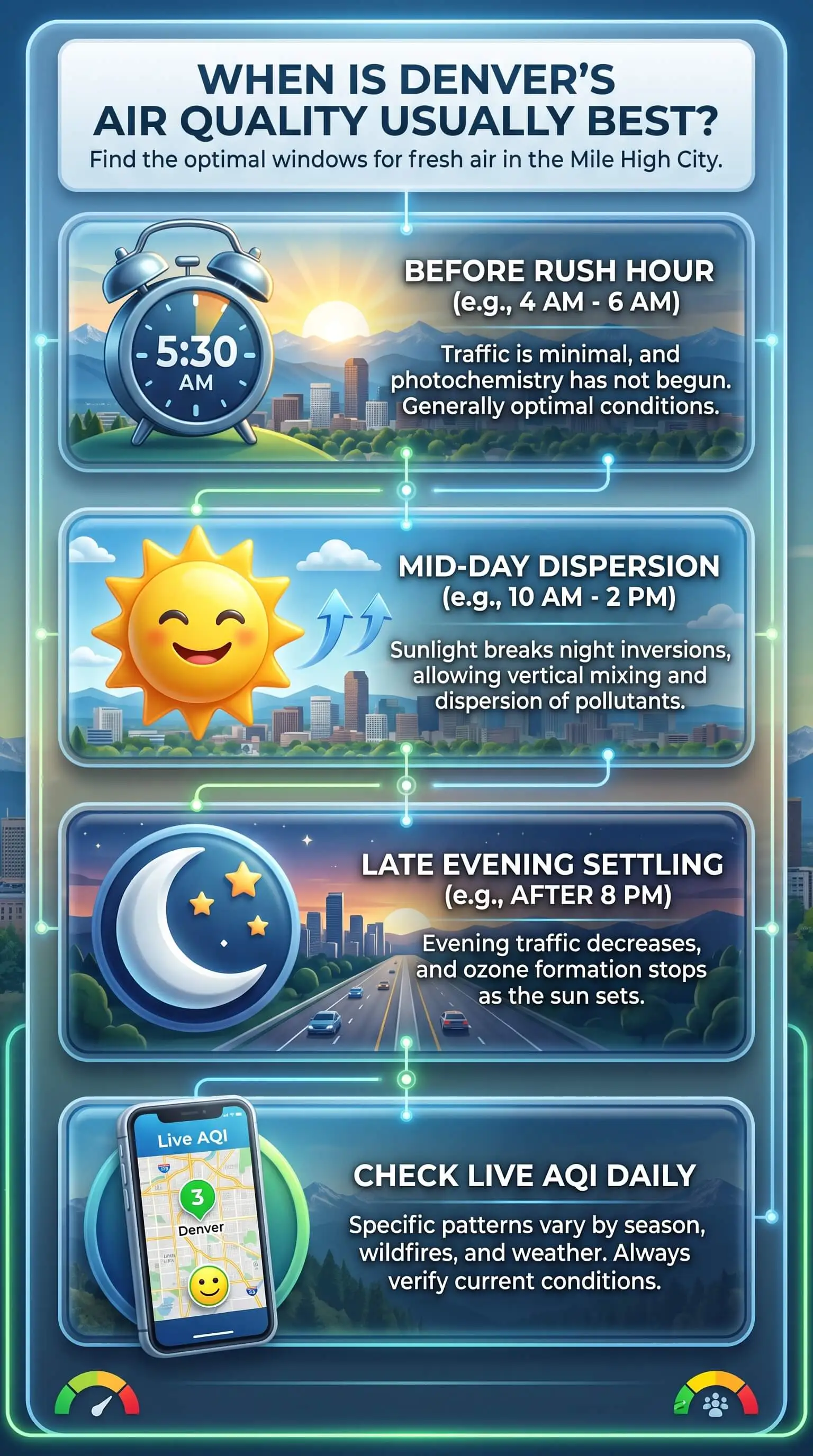
Summer air in Denver is usually cleanest from sunrise to about 10 a.m., before ozone builds.
Winter air usually clears from late morning to mid-afternoon, once the overnight inversion breaks.
Wildfire smoke can show up or linger at any hour, so trust live PM2.5 readings over the clock.
The state forecasts Ozone Action Days and winter Action Days ahead of time, which makes an evening check the easiest way to plan.
Open the windows during each season's clean window, and keep them shut with filtration running on smoke days.
Why Denver Air Quality Changes by the Hour
Two pollutants cause most of the swings, and they keep opposite hours. Ground-level ozone builds in sunlight. Fine particles, known as PM2.5, build up in still air.
Nothing pumps out ozone directly. Sunlight cooks it from the nitrogen oxides and volatile organic compounds that cars, lawn equipment, and oil and gas operations release, so every extra hour of strong sun adds more. Fine particles skip the chemistry. Tailpipes, wood stoves, and smoke put them straight into the air, and they pile up whenever the air stops moving.
Then the terrain gets involved. On calm, clear nights, cold air pools in the valley under a warmer layer that works like a lid. On hot summer days, heat rising off the foothills can drag metro air west toward the mountains and swing it back over the city and northern suburbs later on. That return trip helps explain why Front Range ozone sometimes hangs around into the evening, which can also be a good reason to consult a professional for HVAC installation if you're looking to better manage indoor air conditions.
Summer Mornings Are Cleanest Because Ozone Builds With the Sun
From late May into September, ozone runs the show. It sits lowest around sunrise, climbs through late morning, and peaks from mid-afternoon into early evening. Colorado's summer Ozone Action Day alerts work off the same clock and tell people to skip vigorous outdoor activity during the heat of the day.
The Best Summer Window
Get out early. Sunrise to about 10 a.m. is the safest bet for runs, bike rides, yard work, and kids' practices, because the air is cooler, the sun sits lower, and the ozone chemistry has barely gotten going. On a forecast Action Day, those morning hours matter most.
The Summer Hours to Avoid for Hard Exercise
Noon through early evening on hot, sunny, still days brings the highest ozone, and the western metro and foothills often take the worst of it. Don't count on the evening, either. Recirculated air can keep readings up past sunset, and ozone usually doesn't fall off until the sunlight is gone for the night.
Winter Middays Are Cleanest Because Inversions Trap Morning Air
Winter flips everything. From November through February, clear skies and light wind let the ground cool fast after dark, and an inversion forms that can hang on for a few hours past sunrise. Morning commuters then pour fresh exhaust into that shallow, trapped layer, and the Brown Cloud settles over downtown.
Things usually loosen up once the sun warms the ground and the air starts mixing again, typically from late morning into the afternoon. Cold, cloudy days or fresh snow can keep the lid on all day. Colorado runs a winter high pollution advisory program from October 31 through March 31, and its Front Range advisory page explains that an Action Day for Visibility triggers mandatory indoor burning restrictions across the seven-county Denver-Boulder metro.
Signs an Inversion Is Holding Today
A flat brown or gray band sits over downtown when you look from a hill or the highway.
The night before was clear, calm, and cold, especially right after fresh snow.
The foothills look washed out by mid-morning instead of crisp.
Wildfire Smoke Days Break the Daily Pattern
Smoke keeps its own schedule. It can roll in from a Colorado fire or one several states away at any hour, overnight included, and the wind decides when it leaves. During fire season, an early start guarantees nothing. Check the current air quality index before you make plans, since it reflects how clean or polluted the air is at that moment. Then use the PM2.5 and hourly readings to see whether conditions are improving or getting worse.
Spring and Fall: Wind, Dust, and Pollen
Some of Denver's best air of the year shows up in spring and fall, when the sun is too weak for heavy ozone and inversions come less often than in winter. Watch for dry, windy afternoons that kick up dust. And if spring pollen gets to you, keep in mind that the AQI doesn't count it.
How to Check Denver Air Quality Before You Head Out
This quick routine covers almost every day of the year:
Check for an Action Day. The state usually sends out forecasts and alerts around 4 p.m. for the rest of that day and the next, so an evening look sets you up for tomorrow.
Find the pollutant behind the number. Ozone means go early. Winter PM2.5 means wait for midday. Summer PM2.5 usually means smoke, and the clock won't save you.
Pick your window, then recheck if plans slide by a few hours, because readings can shift fast.
Timing Your Home's Fresh Air Around the Daily Cycle
The same clock tells you when to air out the house. Whatever hangs outside your windows is what they and your HVAC system pull in, and you control when that happens.
Summer: Open the windows early to let in cool, lower-ozone air, then close them by late morning and let the AC take over. With the windows shut, indoor ozone usually stays below outdoor levels.
Winter: Keep the windows closed on inversion mornings. If the house needs fresh air, crack them between late morning and mid-afternoon.
Smoke days: Shut everything, set the system to recirculate, and run the highest-efficiency filter your system can handle, ideally MERV 13.
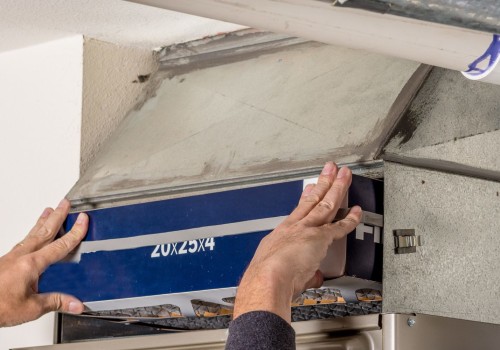
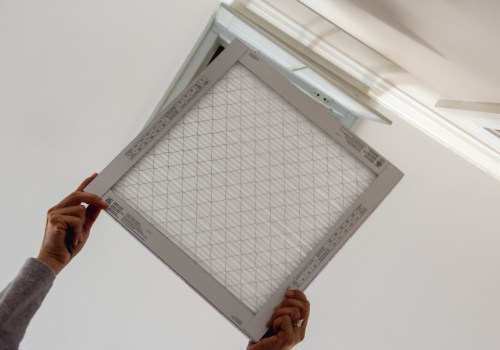
Filter checks: Pull the filter and look at it monthly during smoke season and long inversion stretches. A loaded filter chokes airflow and catches less of what you want gone.
"After years of reading ozone monitor data along the Front Range, I tell people not to judge the afternoon by the thermometer. Ozone needs several hours of strong sun working on the morning's traffic exhaust, so the peak usually trails the hottest part of the day and can hang on into early evening."
7 Essential Resources
Live Denver Air Quality Map: Today's readings across the metro, what each AQI level means, and how the air outside finds its way into your home.
AirNow Air Quality Guide for Ozone: The EPA's one-page guide, with activity advice for every AQI level and a reminder that ozone runs worst in the afternoon and early evening.
EPA Ground-Level Ozone Basics: How sunlight turns vehicle and industrial emissions into ozone, and who faces the greatest health risk.
National Weather Service: What Is an Inversion?: A plain-language walkthrough of how inversions set up in the evening and hang on for a few hours after sunrise.
Simple Steps. Better Air. Ozone Alert Sign-Up: Free text and email alerts from the Regional Air Quality Council every time the state calls a Front Range Ozone Action Day.
CDC Safety Guidelines: Wildfires and Wildfire Smoke: How to keep smoke outside, including MERV 13 filtration and switching your system to recirculate.
NOAA Chemical Sciences Laboratory: Front Range Ozone Transport: How afternoon upslope winds carried Denver ozone above 90 ppb into Rocky Mountain National Park.
3 Supporting Statistics
The 2026 "State of the Air" report ranked the Denver-Aurora-Greeley metro 8th worst in the nation for ozone, based on Jefferson County's average of 29.7 unhealthy ozone days a year. American Lung Association: State of the Air 2026, Colorado
The EPA moved the Denver metro and north Front Range up to "severe" nonattainment under the 2008 ozone standard in 2022, and it rates the region "serious" under the stricter 2015 standard. Colorado Department of Public Health and Environment: Federal Ozone Standards and Nonattainment Areas
On July 22, 2014, ozone at three of 17 monitored Front Range sites topped the 2008 standard, and the Fort Collins site peaked late in the evening after Denver's daytime pollution circled north. NASA Earthdata: A Rising Problem
Denver and the northern Front Range continue to face significant ozone challenges, with frequent unhealthy days, federal nonattainment designations, and pollution that can linger into the evening. These conditions make monitoring outdoor air especially important and can also increase interest in top air filters for helping manage particles that make their way indoors.
Final Thoughts and Opinion
You can't see ozone, but you can plan around it. The clock helps, although knowing which pollutant is in charge today helps more. "Go out early" is great advice in July and bad advice on a January inversion morning, and smoke cancels both rules. My own habit is a thirty-second look at the forecast and the driving pollutant before any long outdoor plan, then a quick check of the windows before bed, especially if I'm also thinking about how HVAC ionizers or other indoor air systems may affect conditions inside the house.
Frequently Asked Questions
Is Denver Air Quality Better in the Morning or Evening?
In summer, mornings usually win, since ozone builds through the afternoon and can linger into early evening. Winter reverses it. Inversions trap overnight and rush-hour pollution near the ground, so winter mornings often run dirtier, and late morning through afternoon tends to be cleaner.
What Time Does Ozone Peak in Denver?
On hot, sunny days, Denver ozone usually peaks from mid-afternoon into early evening. Afternoon winds can push pollution toward the foothills and loop it back later, so readings sometimes stay high past sunset before dropping overnight.
Why Is Denver Air Worse on Winter Mornings?
Clear, calm winter nights set up temperature inversions, with warm air sitting on top of cold air near the ground and trapping pollution underneath. Morning traffic adds exhaust to that trapped layer. Once the sun warms the ground and the air mixes again, conditions usually improve.
When Is Ozone Season in Denver?
Front Range ozone season runs from about late May through mid-September. During those months, the state and the Regional Air Quality Council issue Ozone Action Day alerts whenever forecasts show ozone reaching levels unhealthy for sensitive groups or worse, which can also be a useful reminder to review indoor air strategies such as UV light installation.
Should I Open My Windows in the Morning in Denver?
In summer, yes. Open them early, then close them before ozone climbs. On winter inversion mornings, hold off until late morning or early afternoon. During wildfire smoke, keep the windows closed and let your filtration do the work.
Plan Your Day Around Cleaner Denver Air
The best time of day for Denver air comes down to the season and the pollutant in charge, and a quick Denver air quality check tells you both before you step outside. Pick your window, open the house to match, and enjoy the Front Range when the air is at its cleanest.